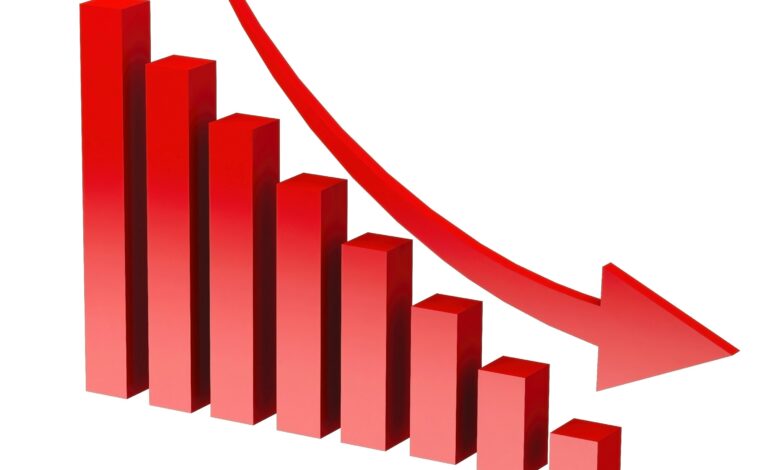
Recession and depression are two terms commonly used to describe periods of economic weakness. While both can lead to falling economic activity, lower consumer spending, rising unemployment, and financial uncertainty, they are not the same thing.
A recession is generally a temporary and relatively broad decline in economic activity, while an economic depression is a much more severe and prolonged downturn.
Understanding the difference between a recession and a depression can help you better understand how economic cycles affect businesses, employment, investments, and everyday life.
In this guide, we’ll explain what a recession and an economic depression are, how they occur, their main differences, and the potential positive and negative effects of economic downturns.
Recession vs. Depression at a Glance
| Recession | Depression |
|---|---|
| Relatively shorter economic downturn | Severe and prolonged economic downturn |
| Economic activity declines significantly | Economic activity contracts dramatically |
| Unemployment usually increases | Unemployment can rise to extremely high levels |
| Businesses may reduce investment and hiring | Businesses may face severe financial distress |
| Recovery can occur within months or a few years | Recovery can take several years |
| Occurs periodically as part of economic cycles | Much rarer than recessions |
The key difference is severity, duration, and overall economic impact.
What Is an Economic Recession?
A recession is a significant decline in economic activity that affects the economy broadly and lasts for more than a few months.
One commonly used rule of thumb defines a recession as two consecutive quarters of declining real GDP. However, economists generally use a broader range of indicators when determining whether an economy is officially in recession.
For example, the National Bureau of Economic Research (NBER) considers factors such as employment, income, production, sales, and overall economic activity.
Many economists view recessions as a normal part of the economic cycle. Economies expand and contract over time, and periods of slower growth can occur after extended periods of expansion.
How Does a Recession Happen?
Economic growth depends on businesses producing goods and services and consumers, businesses, and governments purchasing them.
When demand begins to weaken, businesses may experience:
- Lower sales
- Reduced profits
- Lower production
- Reduced investment
- Hiring freezes or layoffs
A recession can have many possible causes, including declining consumer demand, financial crises, rising interest rates, supply shocks, or other economic disruptions.
For example, if businesses produce more goods than consumers are willing to purchase, inventories may increase. Companies may then reduce production and investment, which can contribute to slower economic activity.
Historical Examples of Recessions
The United States has experienced numerous recessions throughout its history.
Some have been relatively short, while others have lasted considerably longer. The duration and severity of each recession depend on the underlying causes and the policies used to respond to it.
What Is an Economic Depression?
An economic depression is an exceptionally severe and prolonged economic downturn.
Unlike a typical recession, a depression involves a much deeper and more persistent decline in economic activity. It can affect businesses, financial markets, employment, consumer spending, investment, and household incomes for an extended period.
There is no universally accepted official threshold that defines a depression. The commonly cited idea that a depression requires a 10% decline in real GDP is a rule of thumb rather than a formal universal definition.
A depression is therefore best understood by considering the depth, duration, and breadth of the economic decline.
How Does an Economic Depression Develop?
A depression can develop when several economic problems reinforce one another.
For example:
Falling demand → Lower business revenue → Reduced production → Job losses → Lower household income → Even weaker demand
Financial instability can make the situation worse. Falling asset prices, declining investment, business failures, and problems within the banking system can further reduce confidence and economic activity.
This creates a cycle in which economic weakness feeds additional economic weakness.
The Great Depression
The most famous example is the Great Depression, which began in 1929 and became one of the most severe economic crises in modern history.
It was associated with:
- Extremely high unemployment
- Major declines in industrial production
- Falling incomes
- Business failures
- Bank failures
- Severe declines in investment
- Significant reductions in consumer spending
The Great Depression demonstrates how dramatically a prolonged economic downturn can affect households, businesses, and financial systems.
Recession vs. Depression: The Main Differences
Although both represent economic downturns, several important differences distinguish them.
1. Severity
A recession can cause substantial economic damage, but a depression is significantly more severe.
During a depression, businesses may experience prolonged declines in revenue, investment can collapse, and unemployment can reach extremely high levels.
2. Duration
Recessions generally last for a limited period, although some can be relatively long.
Depressions are much more prolonged and can affect the economy for years.
3. Unemployment
Unemployment typically rises during recessions because businesses reduce hiring, production, and staffing.
During a depression, unemployment can become dramatically worse because businesses may close or significantly reduce operations for extended periods.
4. Business Activity
During a recession, many businesses continue operating but may reduce spending, investment, and hiring.
During a depression, widespread business failures and severe reductions in production can occur.
5. Financial Markets
Stock markets and other asset prices can fall significantly during recessions.
During a severe depression, however, financial markets may experience much deeper and longer-lasting declines.
Negative Effects of Recessions and Depressions
Economic downturns can affect almost every part of the economy.
1. Rising Unemployment
One of the most visible effects of an economic downturn is rising unemployment.
When businesses experience lower demand and declining revenue, they may respond by:
- Reducing hiring
- Cutting working hours
- Freezing salaries
- Laying off employees
- Closing locations or operations
The increase in unemployment can then reduce household spending, creating additional pressure on businesses.
2. Economic Contraction
Both recessions and depressions involve significant reductions in economic activity.
When consumers and businesses reduce spending, companies may respond by producing fewer goods and services.
This can result in a cycle of:
Lower demand → Lower production → Lower income → Lower spending
The longer this cycle continues, the more severe the economic consequences can become.
3. Declining Consumer Confidence
Economic uncertainty can cause consumers to become more cautious.
People may postpone:
- Buying cars
- Purchasing homes
- Taking vacations
- Making large investments
- Spending on non-essential products
Instead, they may increase savings and reduce discretionary spending.
While this behavior can protect individual households, widespread reductions in spending can place additional pressure on the economy.
4. Falling Asset Values
Economic downturns can also put pressure on the value of financial and physical assets.
Stock prices, property values, and other investments may decline when investors expect weaker corporate earnings and slower economic growth.
However, asset prices do not always move in the same direction during every recession or depression.
Are There Any Positive Effects of an Economic Downturn?
Recessions and depressions are overwhelmingly difficult periods for households and businesses, but economic contractions can sometimes produce longer-term adjustments within an economy.
These effects should not be interpreted as meaning that recessions or depressions are beneficial overall.
1. Eliminating Excess Inventory
When businesses accumulate excessive inventory during periods of strong production, an economic slowdown can reduce excess supply.
Companies may respond by:
- Reducing production
- Discounting inventory
- Cutting unnecessary expenses
- Improving inventory management
This can help businesses adjust their operations to actual market demand.
2. Improving Business Efficiency
Economic pressure can force companies to examine their costs and operations more carefully.
Businesses may identify:
- Unnecessary expenses
- Inefficient processes
- Excess staffing
- Poorly performing products
- Unprofitable activities
Companies that survive the downturn may emerge with more efficient business models.
3. Creating Opportunities for Long-Term Investment
Economic downturns can sometimes create opportunities for investors and businesses with sufficient capital and a long-term perspective.
Lower asset prices may make certain investments more attractive, although investing during economic uncertainty carries significant risk and requires careful analysis.
How Do Recessions Affect Individuals?
The effects of a recession can vary significantly from person to person.
Some people may experience:
- Job loss
- Reduced working hours
- Lower income
- Difficulty obtaining credit
- Declining investment values
Others may remain employed and experience relatively little direct financial impact.
This is why economic downturns should not be viewed as affecting every household in exactly the same way.
How Can Individuals Prepare for a Recession?
Although no one can predict every economic downturn, individuals can strengthen their financial position by:
- Building an emergency fund
- Managing high-interest debt
- Maintaining a realistic household budget
- Avoiding unnecessary financial commitments
- Diversifying income sources where possible
- Investing according to their risk tolerance and long-term goals
- Continuing to develop valuable professional skills
Financial preparation can make it easier to handle unexpected changes in employment or income.
How Do Recessions Affect Businesses?
Businesses can face several challenges during an economic slowdown.
Customers may reduce spending, making it harder for companies to maintain revenue.
Businesses may therefore need to focus on:
- Protecting cash flow
- Controlling unnecessary expenses
- Retaining valuable customers
- Improving operational efficiency
- Managing inventory carefully
- Reviewing pricing strategies
- Prioritizing profitable products and services
Companies with strong financial planning and healthy cash reserves may be better positioned to withstand periods of economic uncertainty.
Recession vs. Depression: A Simple Example
Imagine a small business that normally generates $100,000 in monthly sales.
During a recession, its sales may fall significantly because customers reduce spending. The company may respond by reducing expenses, postponing expansion, and carefully managing its cash flow.
Now imagine a much more severe and prolonged downturn in which sales continue falling for years, financing becomes difficult to obtain, customers dramatically reduce spending, and many businesses in the industry begin closing.
That situation is closer to what economists mean when discussing an economic depression.
The difference is not simply that one is “bad” and the other is “worse.”
The key factors are how deep the decline is, how long it lasts, and how broadly it affects the economy.
Recession vs. Depression: Frequently Asked Questions
Is a recession the same as a depression?
No. A recession is a significant economic downturn, while a depression is a much more severe and prolonged contraction.
Which is worse, a recession or a depression?
An economic depression is considerably more severe than a typical recession and can cause much greater and longer-lasting economic damage.
How long does a recession last?
There is no fixed duration. Some recessions last only a few months, while others can continue for considerably longer.
How long can a depression last?
A depression can last for several years, depending on the causes of the downturn and the economic policies used to address it.
Can a recession turn into a depression?
A severe recession can potentially develop into a much deeper and more prolonged economic crisis, although this is uncommon.
Can people make money during a recession?
Some investments and businesses may perform well during economic downturns, while others may suffer significant losses. Investment decisions should therefore be based on individual risk tolerance, financial circumstances, and long-term objectives rather than simply assuming that a recession creates easy opportunities.
Final Thoughts
The difference between a recession and a depression mainly comes down to severity, duration, and economic impact.
A recession is a significant but relatively temporary decline in economic activity. A depression is far more severe and prolonged, potentially affecting employment, businesses, financial markets, household incomes, and economic production for years.
Understanding economic cycles can help individuals and businesses make better financial decisions during periods of uncertainty.
Rather than focusing only on the negative effects, it is useful to understand what happens during an economic downturn and how to prepare for it.
For individuals, that may mean strengthening personal finances, maintaining an emergency fund, managing debt, and continuing to develop valuable skills.
For businesses, it means protecting cash flow, controlling costs, maintaining customer relationships, and making careful decisions about investment and expansion.
The economy will inevitably experience periods of expansion and contraction. The better you understand these cycles, the better prepared you can be when the next downturn arrives.

