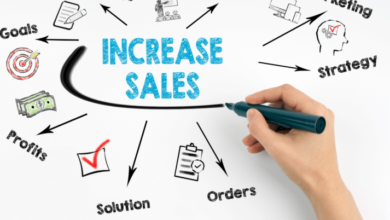
How do you make people buy from you? Whether you own a small business or a large company, having a good product or service is not enough to succeed in sales. One of the biggest challenges you will face is convincing a hesitant customer to make a purchase decision.
So, how do you attract customers and persuade them to buy?
In addition to learning essential sales skills, there are several ethical persuasion techniques that can help you communicate the value of your product more effectively. These aren’t deceptive tricks or manipulative tactics. Instead, they are practical methods for understanding your customers, addressing their needs, and helping them make confident purchasing decisions.
In this article, we’ll explore five steps for attracting customers and convincing them to buy, followed by several psychological principles that can help you deal with hesitant customers.
How to Convince a Customer to Buy in 5 Steps
1. Sell Benefits, Not Just Features
One of the most important principles in sales is to focus on what the customer gains from your product, rather than simply listing its features.
A successful salesperson doesn’t just explain what a product has. They explain how those features solve a customer’s problem or improve their situation.
For example, when selling a car:
Feature:
“This car has an advanced shock protection system.”
Benefit:
“This system helps provide a safer and more comfortable ride for you and your family.”
The feature describes what the product has. The benefit explains why the customer should care.
Customers are ultimately interested in how your product can satisfy their needs, solve their problems, save them time or money, or improve their lives.
Remember: Don’t just sell the product. Sell the outcome the customer wants.
2. Appeal to Emotions, Not Only Logic
People don’t always make purchasing decisions based purely on logic. Emotions can play an important role in determining whether someone decides to buy.
Instead of focusing exclusively on technical specifications and logical arguments, connect your product with the customer’s desires, aspirations, concerns, or goals.
For example, when selling a car:
Logic-focused approach:
“This car is durable, reliable, and has a powerful engine.”
Emotion-focused approach:
“Imagine driving a car that gives you confidence and makes every family trip more comfortable and enjoyable.”
The second approach helps the customer visualize how owning the product could make them feel.
However, emotional selling should always remain honest. Never create false fears or make promises that your product cannot deliver.
3. Focus on What Matters to the Customer
One common mistake in sales is giving customers too much unnecessary information.
A salesperson may spend a long time explaining every feature of a product, even when many of those features aren’t relevant to the customer’s needs.
For example, a real estate salesperson could spend several minutes discussing:
- The type of paint used
- The type of wood
- The window materials
- Interior decorations
- Construction details
These details may matter to some buyers, but they may not be the customer’s primary concerns.
Instead, the salesperson should first understand what the customer values.
Perhaps the customer cares most about:
- A spacious living area
- A great view
- A convenient location
- A quiet neighborhood
- Easy access to transportation
- A safe environment
The best sales conversation is customer-centered, not product-centered.
Ask questions, listen carefully, and then focus on the benefits that matter most to that particular customer.
4. Give the Customer a Compelling Reason to Buy
Sometimes customers are interested in a product but don’t have a strong enough reason to make a decision.
Your job is to clearly communicate what makes your offer valuable or different.
For example, imagine a contracting company submitting a proposal to construct several government buildings.
If competing companies promise to complete the project in 18 months, but your company can realistically complete it in 12 months while maintaining the required quality and standards, that could become a powerful differentiating benefit.
Your reason to buy could be:
“We can complete the project six months earlier without compromising the agreed quality standards.”
The key is to identify a genuine competitive advantage that matters to the customer.
Don’t invent urgency or create false claims. Give customers a legitimate reason to choose your product over the alternatives.
5. Make the Benefits Measurable
Customers often respond better to specific, measurable benefits than vague promises.
Compare these two statements:
Vague:
“This package will help you reduce costs.”
Specific:
“This package can reduce your purchasing costs by approximately 25%, based on your current order volume.”
The second statement is more persuasive because the benefit is tangible.
Whenever possible, use:
- Numbers
- Percentages
- Time savings
- Cost savings
- Performance improvements
- Before-and-after comparisons
- Measurable results
Instead of saying:
“Our software will save you time.”
Say:
“Our software can reduce the time required to process your monthly reports from several hours to approximately 30 minutes.”
Specific benefits are easier for customers to understand, evaluate, and remember.
How to Convince a Hesitant Customer to Buy
Even when customers understand the value of your product, they may still hesitate before making a purchase.
They may be thinking:
- “Is this really worth the money?”
- “What if I make the wrong decision?”
- “Should I wait?”
- “Is there a better option?”
- “Do I really need this?”
Instead of pressuring the customer, your goal should be to reduce uncertainty and help them make an informed decision.
Here are several ethical persuasion techniques you can use.
1. Use Scarcity Responsibly
Scarcity can influence purchasing decisions because people tend to place greater value on something that is genuinely limited.
For example:
“This introductory offer is available until the end of the week.”
Or:
“Only 10 units remain in stock.”
However, scarcity should always be real.
Creating fake deadlines or pretending that a product is almost sold out when it isn’t can damage customer trust and your reputation.
Use scarcity to communicate genuine limitations, not to manipulate customers.
2. Create Purchase Incentives
A hesitant customer may need an additional incentive to complete the purchase.
Depending on your business, you could offer:
- A limited discount
- Free shipping
- A free trial
- A bonus product
- A free consultation
- Extended support
- A money-back guarantee
For example:
“If you purchase this week, you’ll receive free delivery and three months of additional support.”
The incentive should add genuine value rather than simply creating artificial pressure.
3. Explain the Personal Benefits
Customers are more likely to buy when they clearly understand what they personally gain from the purchase.
Instead of simply describing the product, connect it directly to the customer’s situation.
For example:
“This service can help you save several hours every week, allowing you to spend more time on higher-value tasks.”
You can also explain the reasonable consequences of delaying a decision, but avoid exaggerated fear-based messaging.
The goal is to help the customer understand both:
What they gain by buying
and
What they may miss by waiting.
4. Use Social Proof
People often feel more confident about a purchasing decision when they see that other customers have successfully used the same product or service.
Social proof can include:
- Customer reviews
- Testimonials
- Case studies
- Ratings
- Customer numbers
- Before-and-after results
- User-generated content
For example:
“More than 2,000 businesses have used our service.”
Or:
“Customers reported saving an average of 5 hours per week after implementing the system.”
Only use claims that are accurate and verifiable.
5. Use Customer Recommendations and Testimonials
Recommendations from previous customers can be particularly powerful because they provide an independent perspective on your product.
Instead of telling customers only:
“Our product is excellent.”
Show them what actual customers experienced.
For example:
“We reduced our monthly reporting time from two days to a few hours after implementing the system.”
A specific testimonial is generally more convincing than a vague statement such as:
“Great product! Highly recommended!”
6. Use Repetition Strategically
Sometimes a customer doesn’t buy simply because they haven’t fully understood the value of your offer.
Rather than repeating the exact same sales message, communicate the product’s value from different relevant perspectives.
For example, you could explain:
- How the product saves money
- How it saves time
- How it solves a specific problem
- How other customers use it
- What results customers can expect
- How the product compares with alternatives
Repetition can reinforce your message, but excessive repetition can have the opposite effect and annoy the customer.
The Most Important Principle: Understand the Customer
Ultimately, successful selling isn’t about finding clever psychological tricks that force people to buy.
It’s about understanding what the customer needs and communicating how your product can genuinely help them.
Customers don’t buy products simply because of their features. They buy because they believe the product will provide something valuable to them.
That value could be:
- Solving a problem
- Saving money
- Saving time
- Reducing risk
- Improving convenience
- Increasing productivity
- Improving their lifestyle
- Helping them achieve a specific goal
The better you understand your customer’s priorities, the easier it becomes to communicate your product’s value.
Final Thoughts
If you want to attract more customers and increase your sales, don’t focus solely on telling people how great your product is.
Instead, show them why it matters to them.
Focus on benefits rather than features, appeal to genuine customer needs, keep your message relevant, provide measurable value, and use social proof to build confidence.
When dealing with hesitant customers, your goal shouldn’t be to pressure them into buying. Your goal should be to remove uncertainty, answer their concerns, and give them enough information to make a confident decision.
Always use persuasion techniques ethically and responsibly. Building long-term customer trust is far more valuable than making a single sale.
The best salesperson isn’t the person who can pressure the most people into buying. It’s the person who can understand the customer best and clearly demonstrate why the product is worth buying.